Sportsfan360
Everyone Says They Knew It: Designing a Skill Based IPL Auction Game
Everyone Says They Knew It: Designing a Skill Based IPL Auction Game
Everyone Says They Knew It: Designing a Skill Based IPL Auction Game
COMPANY
Sportsfan360
Sportsfan360
Sportsfan360
ROLE
Product Designer
Product Designer
Product Designer
YEAR
2025
2025
2025
The problem we noticed
The problem we noticed
The problem we noticed
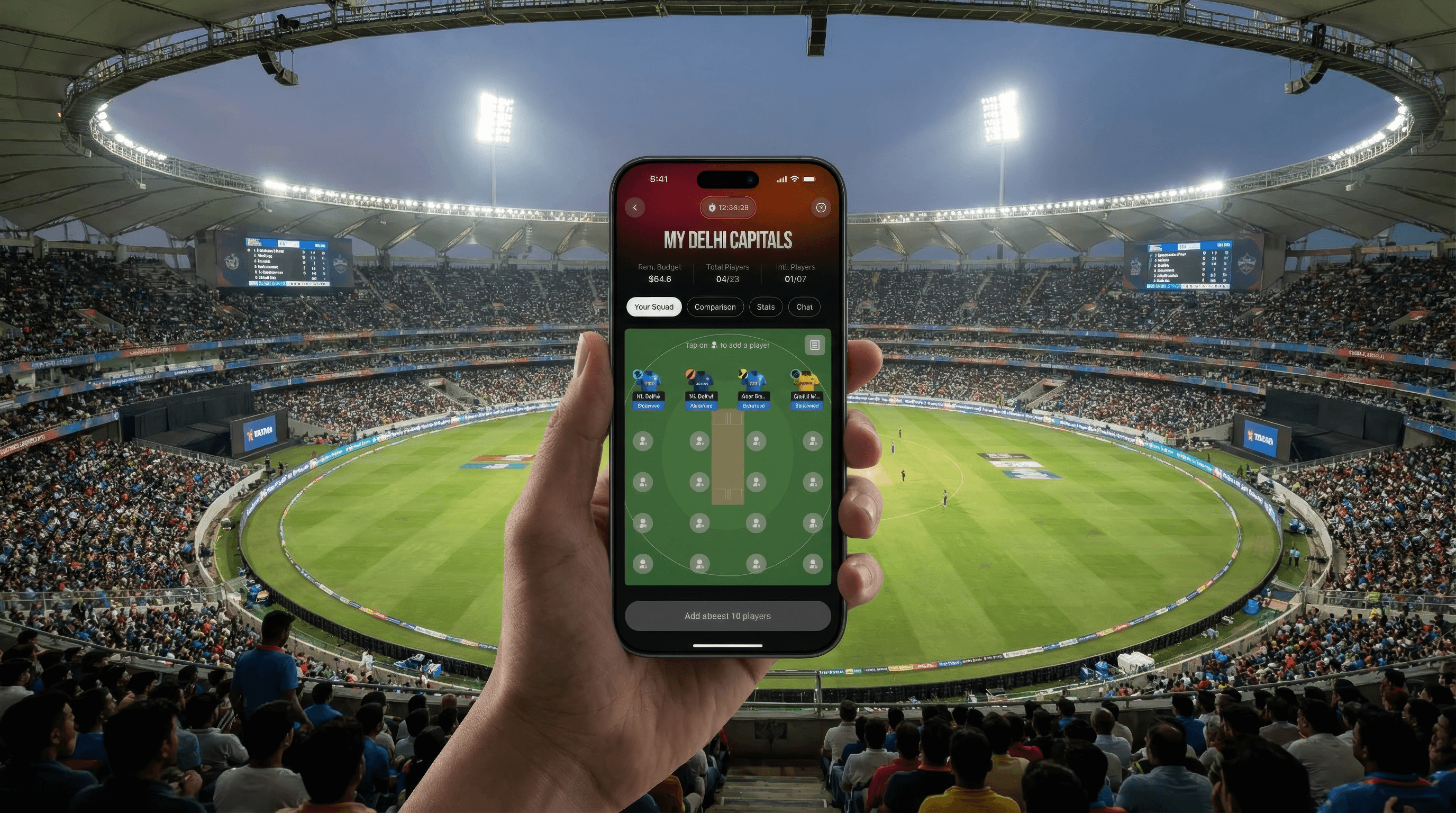
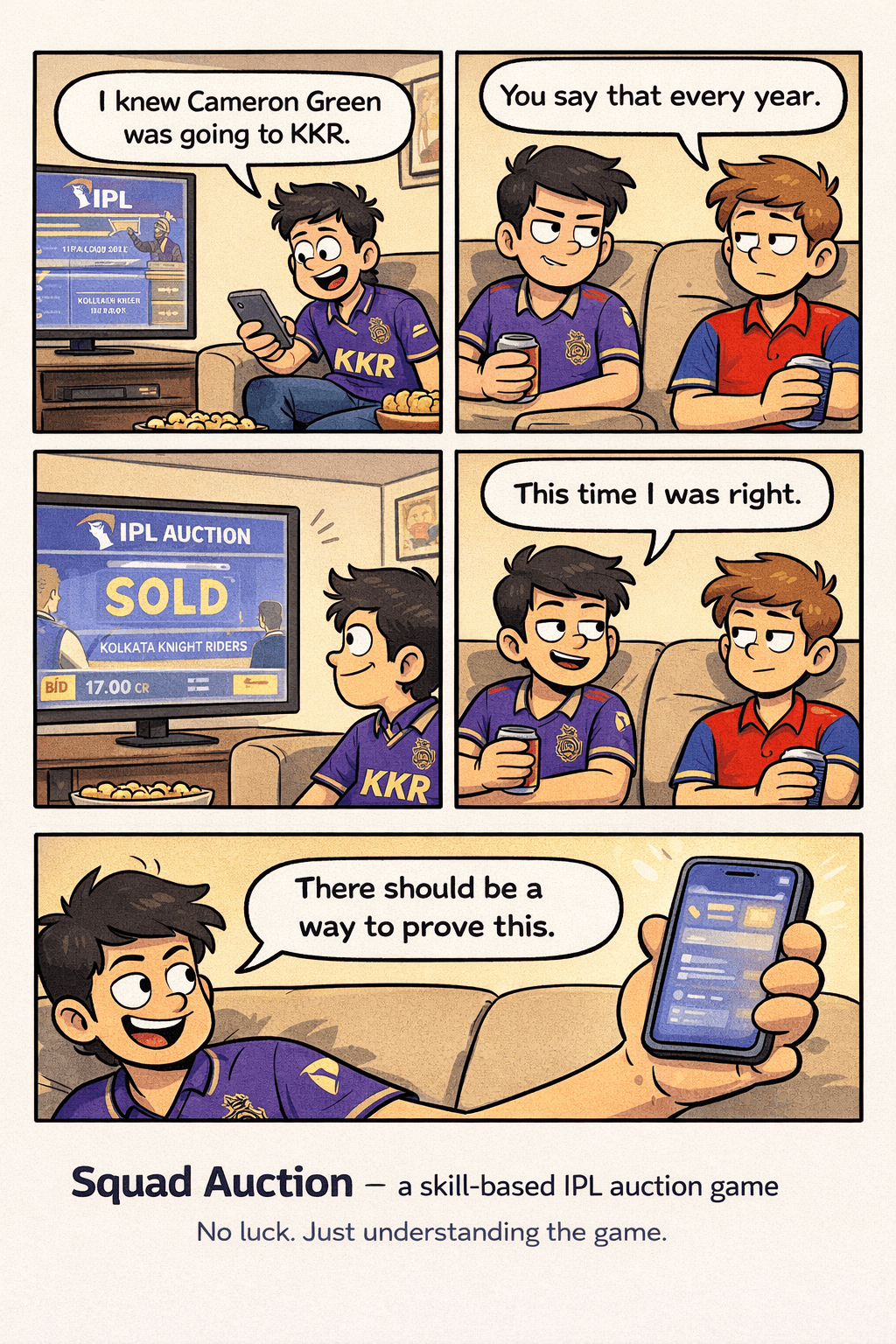
Every IPL auction, fans turn into analysts. They predict picks before the hammer falls, argue over team strategies, and keep mental notes of who called it right. Once the auction is over, though, every prediction sounds the same. Everyone says they knew it all along. Squad Auction was built for that gap. A skill-based game where fans lock in their predictions before the real auction begins and see how well they actually understand the game once results unfold.
The idea came from a simple observation. Fans are already predicting outcomes in real time, days before the auction starts. The opportunity wasn’t to change that behaviour, but to give it structure. Unlike traditional fantasy games that rely on chance or post-match performance, Squad Auction focuses on informed decisions made ahead of time. The challenge was to design an experience that stays simple and intuitive, even for a high-pressure event, while still rewarding knowledge over luck.
Every IPL auction, fans turn into analysts. They predict picks before the hammer falls, argue over team strategies, and keep mental notes of who called it right. Once the auction is over, though, every prediction sounds the same. Everyone says they knew it all along. Squad Auction was built for that gap. A skill-based game where fans lock in their predictions before the real auction begins and see how well they actually understand the game once results unfold.
The idea came from a simple observation. Fans are already predicting outcomes in real time, days before the auction starts. The opportunity wasn’t to change that behaviour, but to give it structure. Unlike traditional fantasy games that rely on chance or post-match performance, Squad Auction focuses on informed decisions made ahead of time. The challenge was to design an experience that stays simple and intuitive, even for a high-pressure event, while still rewarding knowledge over luck.
Timeline
1 month
Collaborators
2 Product Designers, 1 Frontend Developer, Chat GPT
Background
SportsFan360 is a fan engagement platform built to bring fans closer to the sport, the teams, and the players they care about through interactive and skill driven experiences.
The experience
The experience
The experience
Before getting into the process, here’s what the final experience looks like. This is the version that went live during the IPL auction.
Before getting into the process, here’s what the final experience looks like. This is the version that went live during the IPL auction.
onboarding
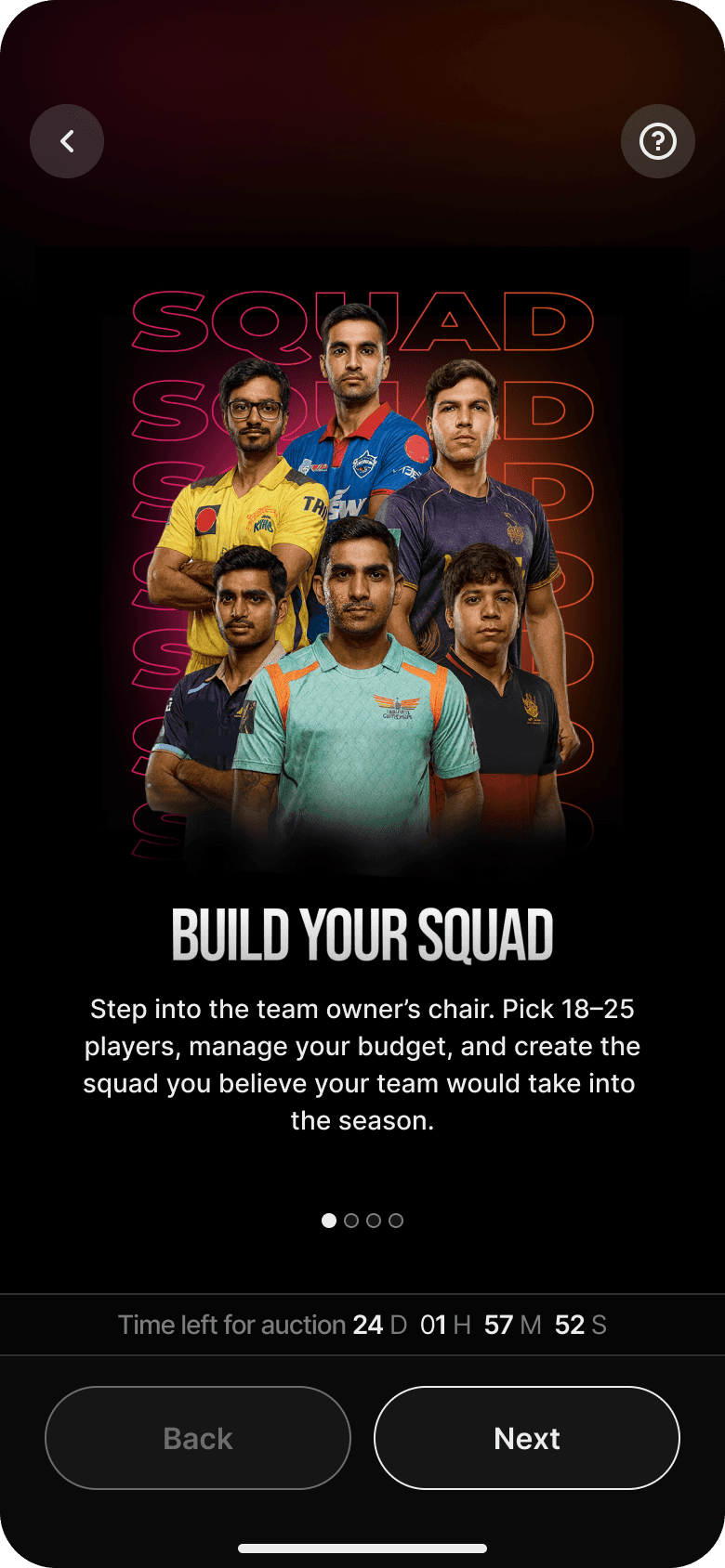
The onboarding screens were designed to quickly explain what Squad Auction is and how it works, especially since the format is very different from traditional fantasy games like Dream11 or My11Circle.
Instead of overloading users with rules, the screen sets context, communicates key constraints, and frames the experience as a role shift. This helped establish a clear mental model early and reduced confusion once users entered the auction flow.
The onboarding screens were designed to quickly explain what Squad Auction is and how it works, especially since the format is very different from traditional fantasy games like Dream11 or My11Circle.
Instead of overloading users with rules, the screen sets context, communicates key constraints, and frames the experience as a role shift. This helped establish a clear mental model early and reduced confusion once users entered the auction flow.
The onboarding screens were designed to quickly explain what Squad Auction is and how it works, especially since the format is very different from traditional fantasy games like Dream11 or My11Circle.
Instead of overloading users with rules, the screen sets context, communicates key constraints, and frames the experience as a role shift. This helped establish a clear mental model early and reduced confusion once users entered the auction flow.

Team management
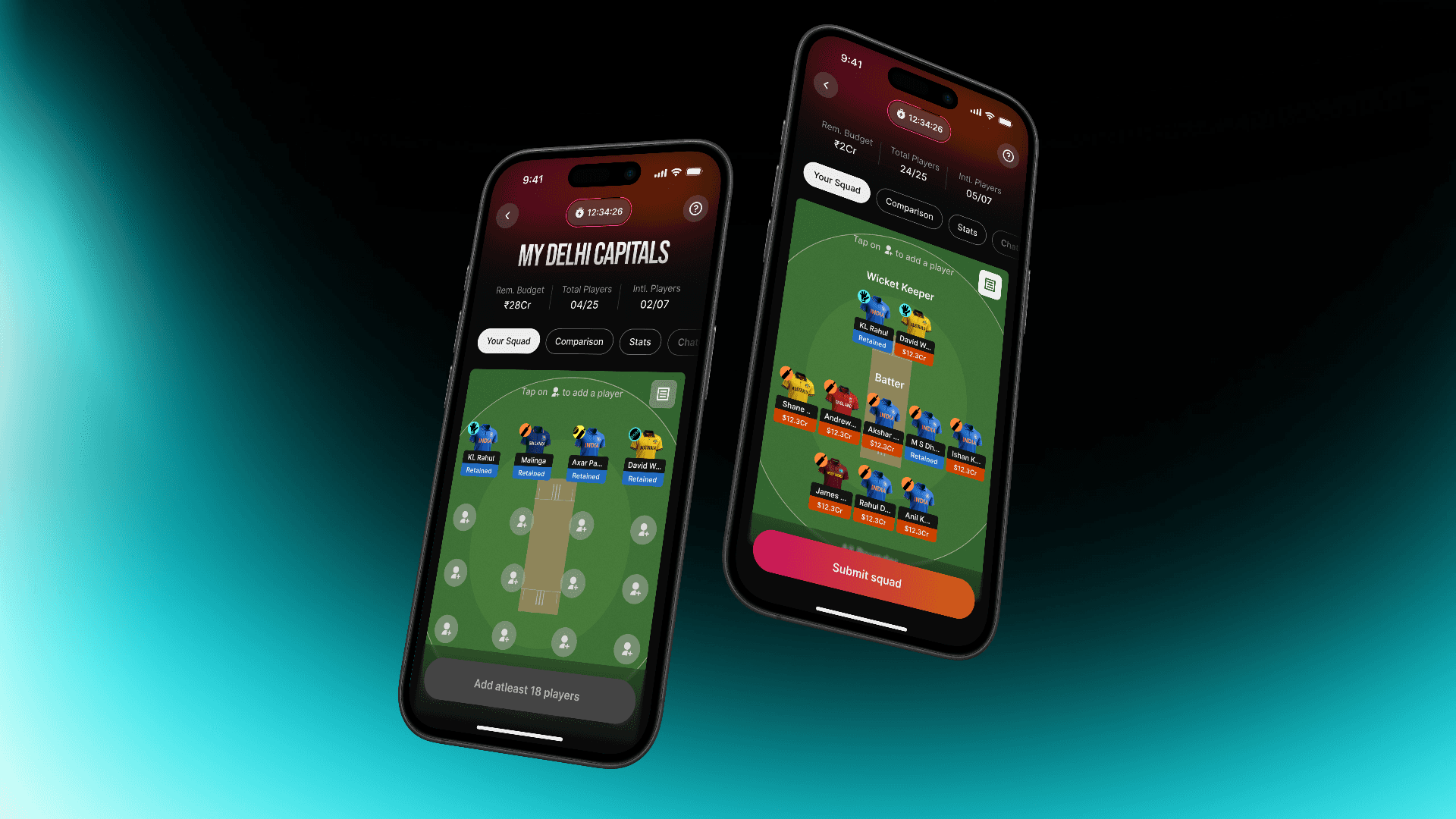
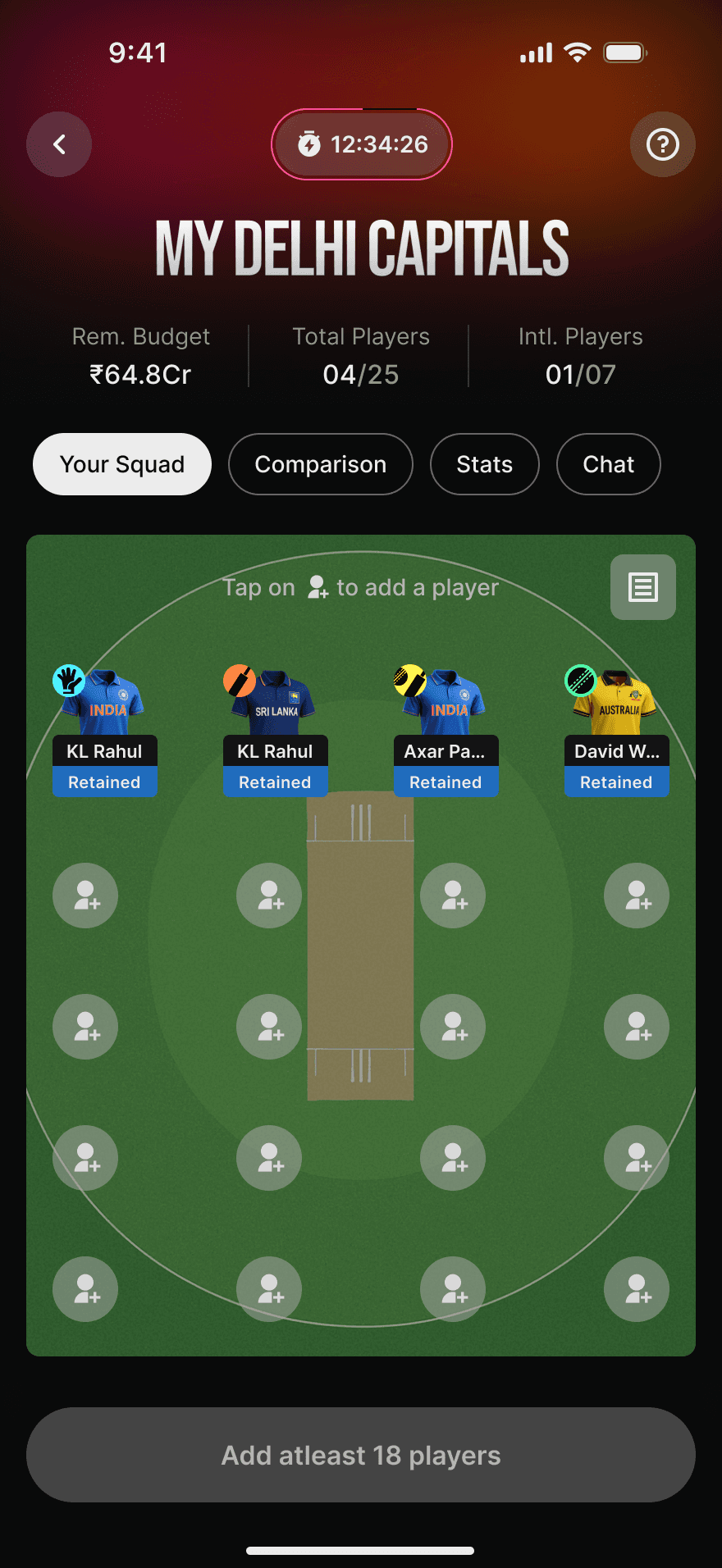
The squad overview screen acts as the central workspace for the auction. Showing retained players upfront grounds the experience in real IPL squads and immediately makes the game feel familiar and credible.
The field-based layout mirrors how fans already visualise a team, while budget and player constraints remain visible at all times. This helped users reason about balance and next steps without breaking flow.
The squad overview screen acts as the central workspace for the auction. Showing retained players upfront grounds the experience in real IPL squads and immediately makes the game feel familiar and credible.
The field-based layout mirrors how fans already visualise a team, while budget and player constraints remain visible at all times. This helped users reason about balance and next steps without breaking flow.
Team management
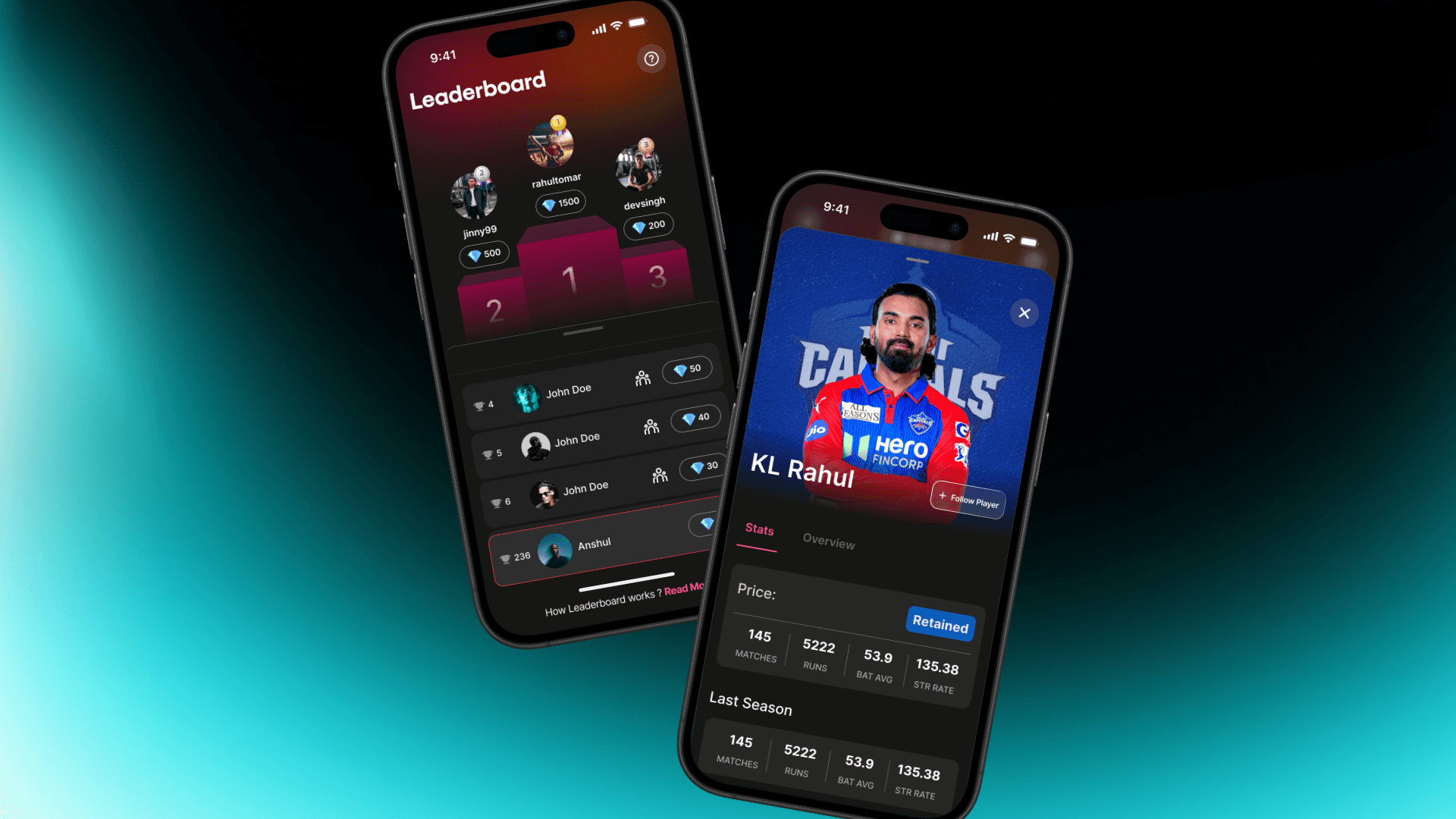
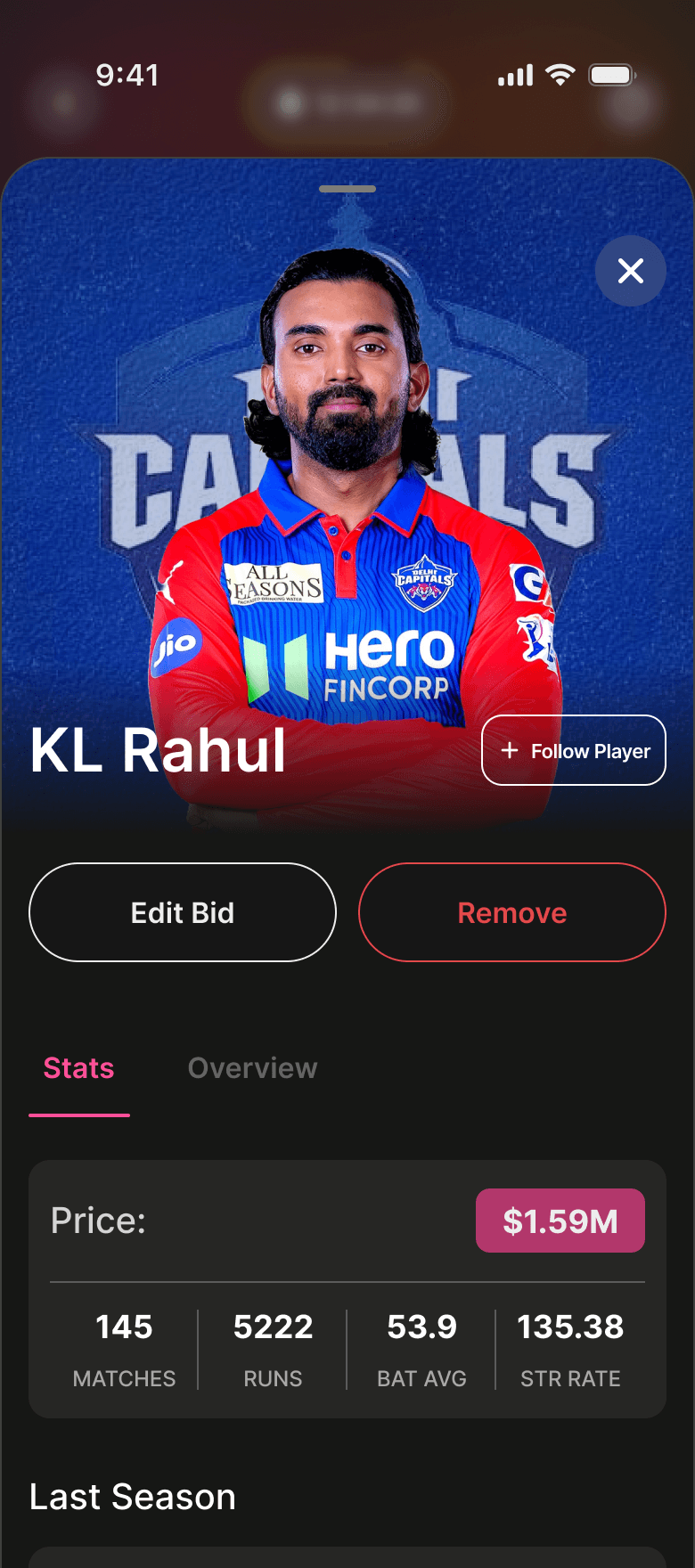
Each player has a dedicated stats screen that surfaces key performance indicators across both IPL and international cricket. This allows users to quickly assess a player’s consistency, role, and impact beyond just recent hype.
The goal was not to overwhelm users with data, but to present only what’s relevant at the moment of decision. By keeping stats contextual and easy to scan, users could validate their instincts and decide whether a player would genuinely add value to their squad.
Each player has a dedicated stats screen that surfaces key performance indicators across both IPL and international cricket. This allows users to quickly assess a player’s consistency, role, and impact beyond just recent hype.
The goal was not to overwhelm users with data, but to present only what’s relevant at the moment of decision. By keeping stats contextual and easy to scan, users could validate their instincts and decide whether a player would genuinely add value to their squad.
Team management
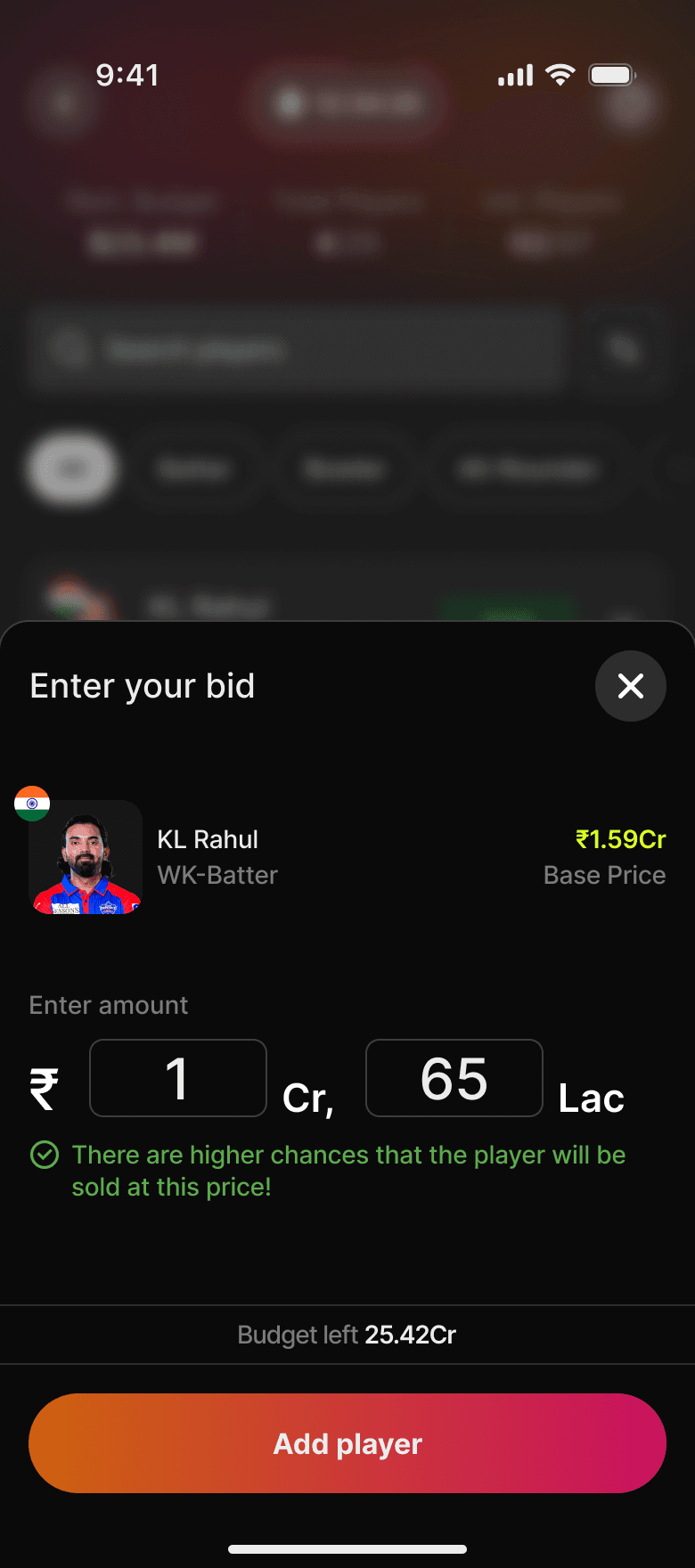
The bidding screen allows users to predict the price at which a player will be sold during the real auction. The closer a user’s bid is to the actual sale price, the more points they earn, directly impacting their position on the leaderboard.
During early testing, we noticed users struggled with entering large numbers accurately and often hesitated because of multiple zeroes. Splitting the bid into crores and lakhs reduced this friction and made price prediction feel more approachable without simplifying the challenge itself.
This design helped users focus on making informed predictions rather than worrying about input errors.
The bidding screen allows users to predict the price at which a player will be sold during the real auction. The closer a user’s bid is to the actual sale price, the more points they earn, directly impacting their position on the leaderboard.
During early testing, we noticed users struggled with entering large numbers accurately and often hesitated because of multiple zeroes. Splitting the bid into crores and lakhs reduced this friction and made price prediction feel more approachable without simplifying the challenge itself.
This design helped users focus on making informed predictions rather than worrying about input errors.
Leaderboard
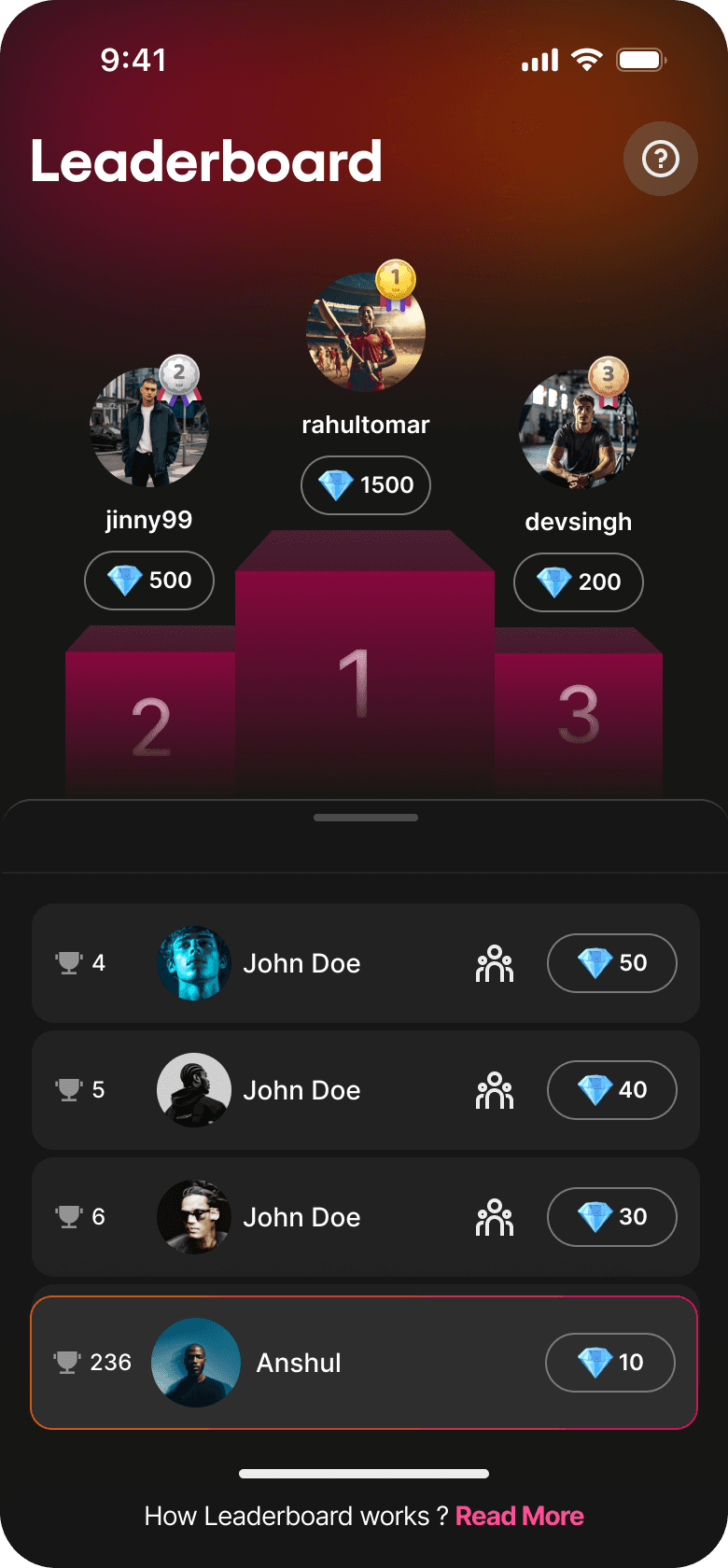
The leaderboard goes live on the day of the auction and recalculates rankings every 10 minutes as player prices are revealed. This gives users a live view of the standings and encourages repeat check-ins throughout the auction window.
Users can also view other teams directly from the leaderboard. This was designed not just to explore different fan strategies, but to keep the game transparent and credible. Being able to see how others built their squads helped reinforce trust in the system and the accuracy of the rankings.
Once the auction ends, the leaderboard fully settles and becomes the final validation of each squad’s predictions.
The leaderboard goes live on the day of the auction and recalculates rankings every 10 minutes as player prices are revealed. This gives users a live view of the standings and encourages repeat check-ins throughout the auction window.
Users can also view other teams directly from the leaderboard. This was designed not just to explore different fan strategies, but to keep the game transparent and credible. Being able to see how others built their squads helped reinforce trust in the system and the accuracy of the rankings.
Once the auction ends, the leaderboard fully settles and becomes the final validation of each squad’s predictions.
Key Questions and Decisions…
Key Questions and Decisions…
Key Questions and Decisions…
Before looking at existing products, patterns or even research afor that matter, we aligned on a few fundamental questions that would shape the direction of Squad Auction. These questions helped narrow the problem space and avoid designing another fantasy-style experience by default.
Before looking at existing products, patterns or even research afor that matter, we aligned on a few fundamental questions that would shape the direction of Squad Auction. These questions helped narrow the problem space and avoid designing another fantasy-style experience by default.
How do we reward understanding instead of probability?
How do we reward understanding instead of probability?
Most sports games optimise for statistical performance after the fact. For Squad Auction, the decision was to lock predictions before the real auction begins, shifting the challenge to foresight and preparation rather than optimisation during play.
Here are a few key insights that I found from my research:
- Fans prioritise confidence over speed when making auction predictions
- Post-auction validation and comparison with other squads matters more than rewards
- Randomness or chance based outcomes immediately reduce trust
How do we make outcomes feel credible and fair?
How do we make outcomes feel credible and fair?
Because the game claims to be skill-based, transparency became a non-negotiable design principle. This influenced decisions like allowing users to view other squads from the leaderboard and recalculating rankings live as auction outcomes unfolded.
Here are a few key insights that I found from my research:
- Fans prioritise confidence over speed when making auction predictions
- Post-auction validation and comparison with other squads matters more than rewards
- Randomness or chance based outcomes immediately reduce trust
How familiar should the experience feel?
How familiar should the experience feel?
While the mechanics were new, we intentionally leaned on familiar mental models around teams, points, and leaderboards. This reduced onboarding friction while still allowing us to break away from fantasy norms where they conflicted with the core intent.
These questions guided what we chose to build, and just as importantly, what we chose not to include.
Here are a few key insights that I found from my research:
- Fans prioritise confidence over speed when making auction predictions
- Post-auction validation and comparison with other squads matters more than rewards
- Randomness or chance based outcomes immediately reduce trust
What we learned from fans
What we learned from fans
What we learned from fans
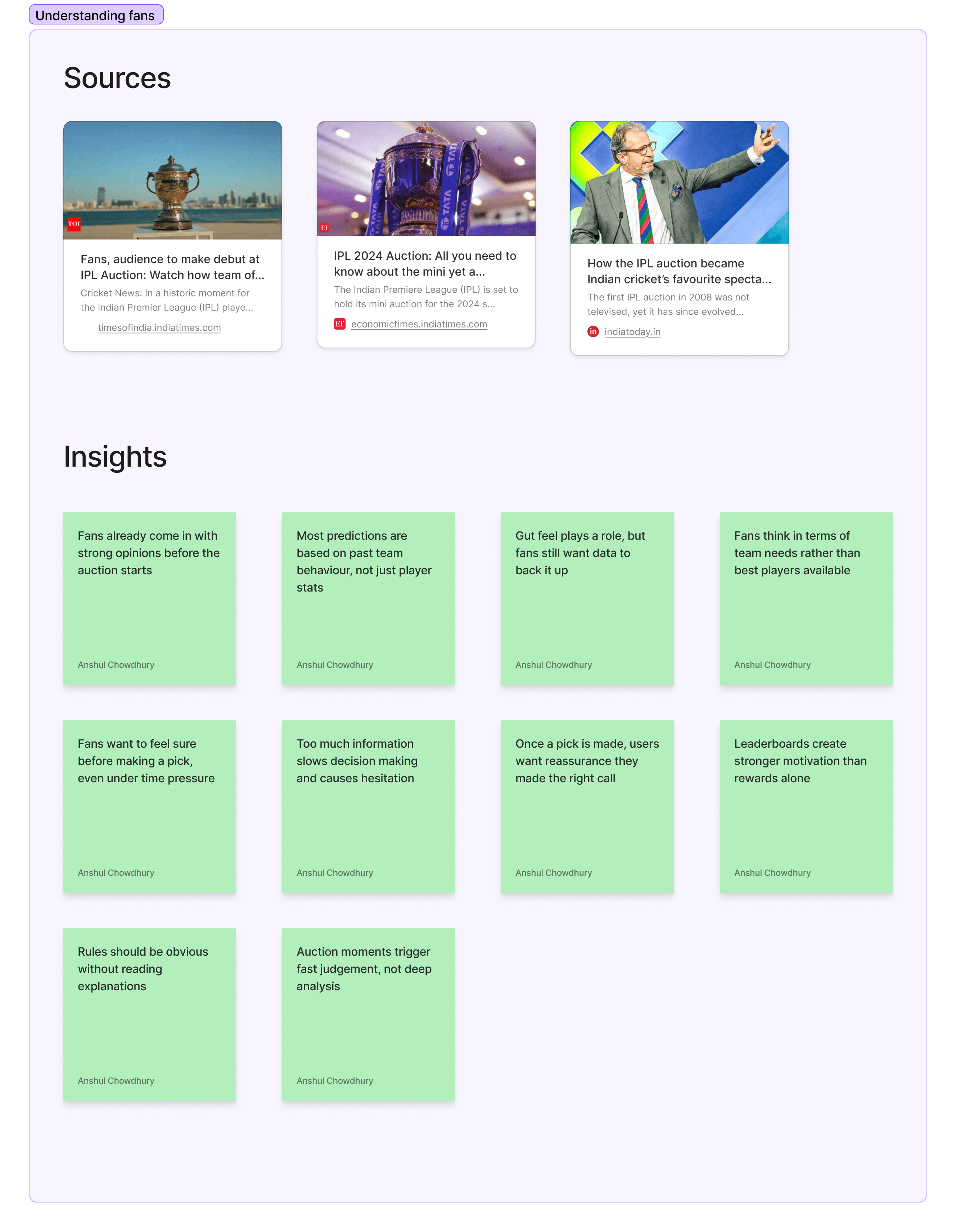
Conversations with fans made one thing clear. Auction predictions are rarely random. Most fans come prepared with opinions shaped by past seasons, team behaviour, and years of watching the game. While data helps validate these opinions, decisions are usually made quickly and with confidence.
Fans wanted an experience that respected their understanding of the game. Too much information slowed them down, while unclear rules created hesitation. What mattered most was feeling confident about a decision at the moment it was made and being able to validate that confidence once the auction ended.
These learnings helped shape an experience that stayed familiar, fast, and focused on clarity rather than complexity.
Conversations with fans made one thing clear. Auction predictions are rarely random. Most fans come prepared with opinions shaped by past seasons, team behaviour, and years of watching the game. While data helps validate these opinions, decisions are usually made quickly and with confidence.
Fans wanted an experience that respected their understanding of the game. Too much information slowed them down, while unclear rules created hesitation. What mattered most was feeling confident about a decision at the moment it was made and being able to validate that confidence once the auction ended.
These learnings helped shape an experience that stayed familiar, fast, and focused on clarity rather than complexity.
Key Insights
Key Insights
Key Insights
Here are a few key insights that I found from my research:
- Fans prioritise confidence over speed when making auction predictions
- Post-auction validation and comparison with other squads matters more than rewards
- Randomness or chance based outcomes immediately reduce trust
Here are a few key insights that I found from my research:
- Fans prioritise confidence over speed when making auction predictions
- Post-auction validation and comparison with other squads matters more than rewards
- Randomness or chance based outcomes immediately reduce trust
What we chose to do differently
What we chose to do differently
What we chose to do differently
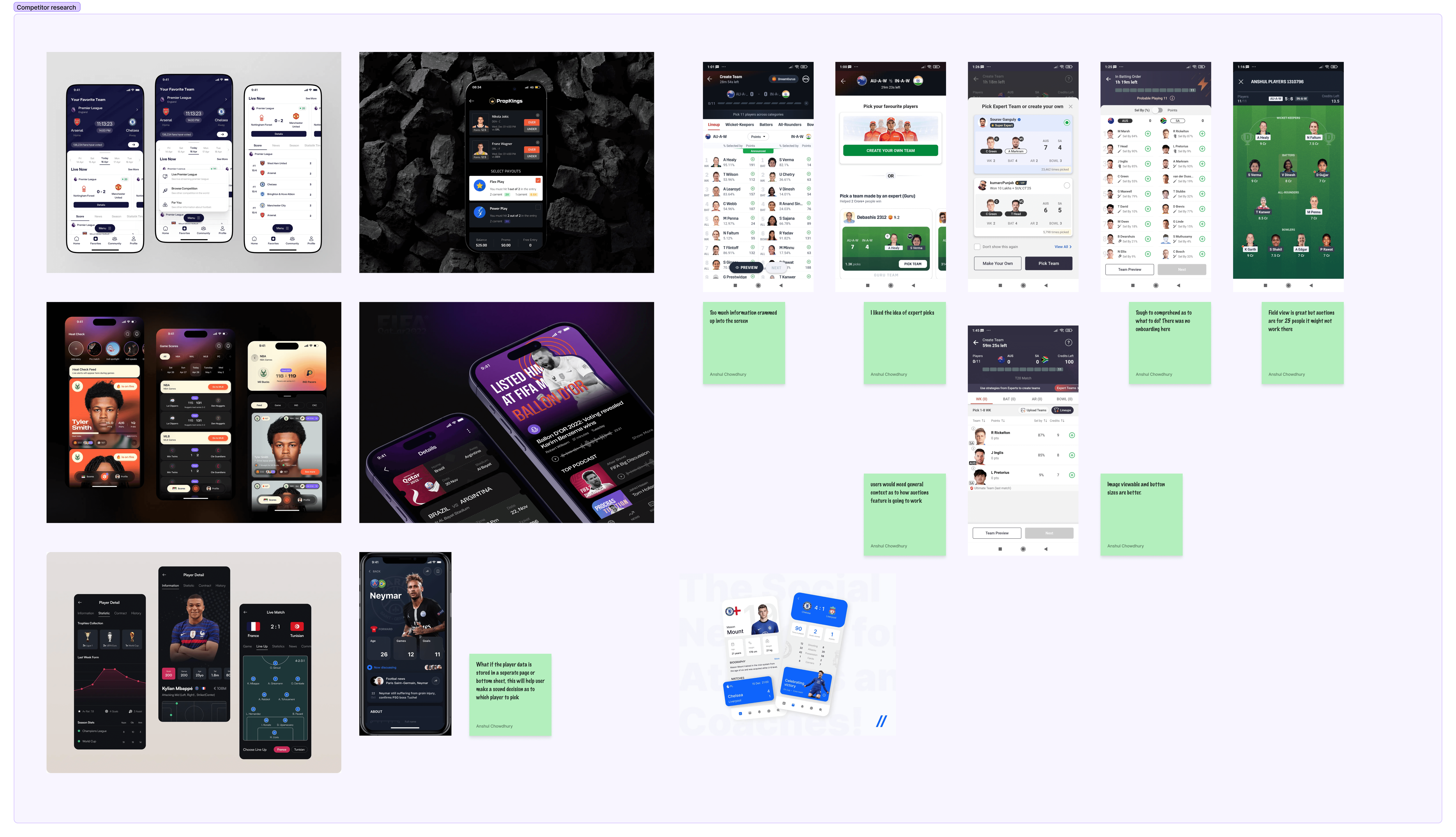
While Squad Auction does not fit neatly into the fantasy gaming category, we intentionally studied existing fantasy and sports gaming products to understand the mental models users already bring with them. Products like Dream11 and My11Circle have shaped how users expect teams, points, and rankings to work, even if the underlying mechanics are different. Rather than fighting these expectations, we chose to reuse familiar patterns where they helped reduce learning effort, and deliberately break away where they conflicted with a skill-first experience. For example, traditional fantasy games optimise for probability and post-match performance. Squad Auction shifts this focus to foresight, asking users to commit decisions before the real auction begins.
We also looked beyond cricket-specific products. Football experiences like UEFA fantasy leagues and other sports games influenced how we approached progression, validation, and feedback. These references helped us design a system that felt competitive and game-like without relying on randomness or constant optimisation. A key UX decision was transparency. Unlike most fantasy platforms where teams remain private, Squad Auction allows users to view other squads through the leaderboard. This was a conscious choice to build trust in the system, allowing users to understand why rankings changed and how outcomes were determined.
Overall, the goal was not to replicate existing fantasy mechanics, but to borrow familiar structures that reduced cognitive load while designing a fundamentally different experience. One that rewards understanding of the game, not just statistical optimisation.
While Squad Auction does not fit neatly into the fantasy gaming category, we intentionally studied existing fantasy and sports gaming products to understand the mental models users already bring with them. Products like Dream11 and My11Circle have shaped how users expect teams, points, and rankings to work, even if the underlying mechanics are different. Rather than fighting these expectations, we chose to reuse familiar patterns where they helped reduce learning effort, and deliberately break away where they conflicted with a skill-first experience. For example, traditional fantasy games optimise for probability and post-match performance. Squad Auction shifts this focus to foresight, asking users to commit decisions before the real auction begins.
We also looked beyond cricket-specific products. Football experiences like UEFA fantasy leagues and other sports games influenced how we approached progression, validation, and feedback. These references helped us design a system that felt competitive and game-like without relying on randomness or constant optimisation. A key UX decision was transparency. Unlike most fantasy platforms where teams remain private, Squad Auction allows users to view other squads through the leaderboard. This was a conscious choice to build trust in the system, allowing users to understand why rankings changed and how outcomes were determined.
Overall, the goal was not to replicate existing fantasy mechanics, but to borrow familiar structures that reduced cognitive load while designing a fundamentally different experience. One that rewards understanding of the game, not just statistical optimisation.
Information architecture & early structure
Information architecture & early structure
Information architecture & early structure
Before getting into screens, the focus was on figuring out the right structure for the auction flow. The auction itself is fast and high pressure, so the experience needed to feel predictable and easy to move through.
The flow was broken down based on how fans already think during an auction. First, understanding what the game is and the constraints. Then, getting a sense of the team and retained players. After that, evaluating players, making price predictions, and finally checking outcomes on the leaderboard.
Early wireframes were used to test this structure quickly and catch friction before getting into visual design. This helped cut unnecessary steps, tighten the sequence, and make sure each screen had a clear purpose.
I won’t bore you with the entire IA and wireframe dump here, but if you want to dig deeper, you can take a look at the full file.
Before getting into screens, the focus was on figuring out the right structure for the auction flow. The auction itself is fast and high pressure, so the experience needed to feel predictable and easy to move through.
The flow was broken down based on how fans already think during an auction. First, understanding what the game is and the constraints. Then, getting a sense of the team and retained players. After that, evaluating players, making price predictions, and finally checking outcomes on the leaderboard.
Early wireframes were used to test this structure quickly and catch friction before getting into visual design. This helped cut unnecessary steps, tighten the sequence, and make sure each screen had a clear purpose.
I won’t bore you with the entire IA and wireframe dump here, but if you want to dig deeper, you can take a look at the full file.
Where design made the biggest difference
Where design made the biggest difference
Where design made the biggest difference
Onboarding and early guidance
Onboarding and early guidance
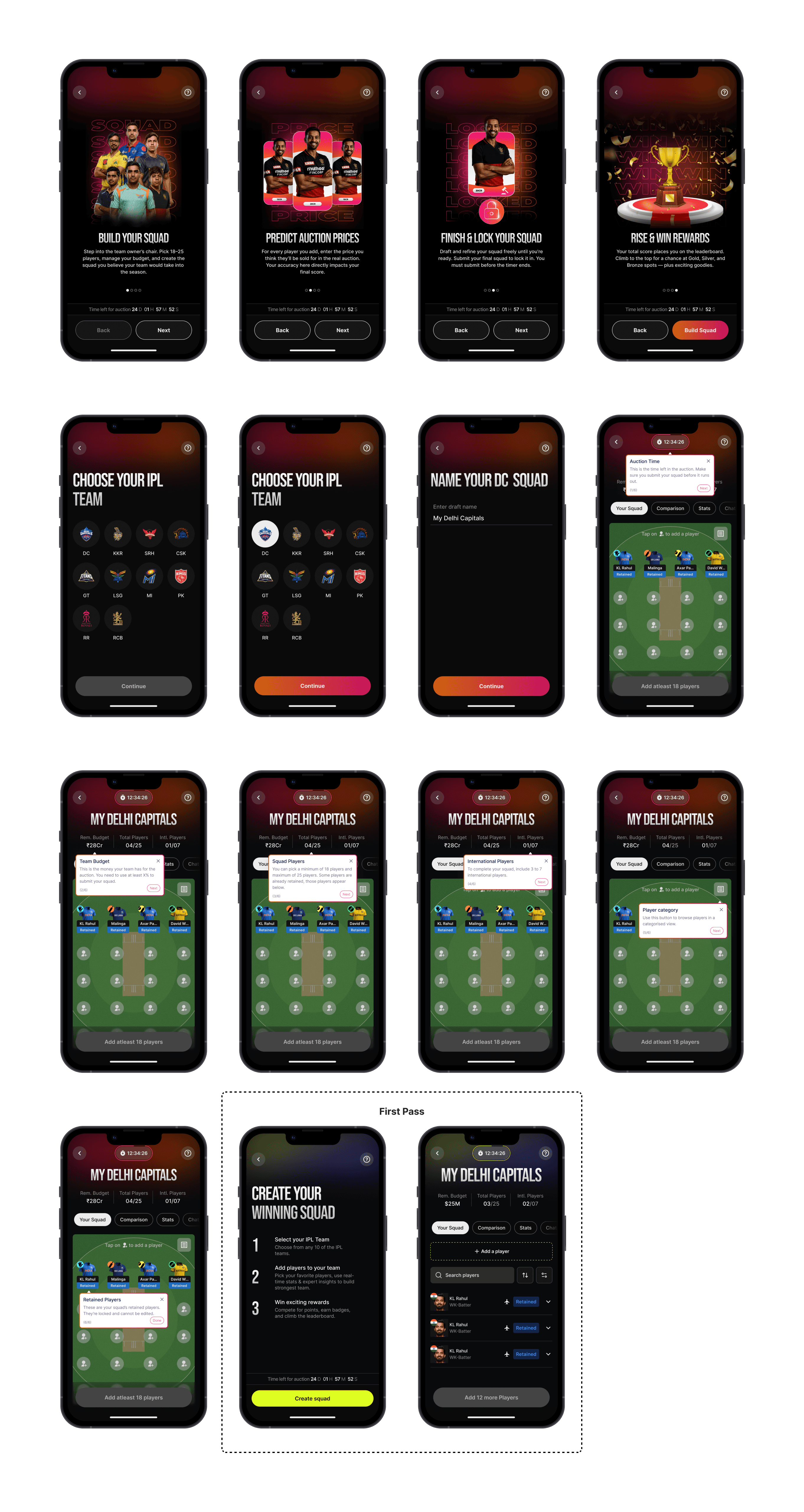
Onboarding for Squad Auction was critical because the game format was unfamiliar. The first draft relied on a few pointers before sending users straight into the auction, which led to confusion once real decisions had to be made. The goal was to reduce this early uncertainty without slowing users down or turning onboarding into a rulebook.
What changed and why:
- Added a short onboarding flow to establish the right mental model before users entered the auction, prioritising clarity over completeness.
- Introduced contextual tooltips on key screens like Adding a Player and the Bidding screen, broken into small steps and optional to avoid interrupting flow.
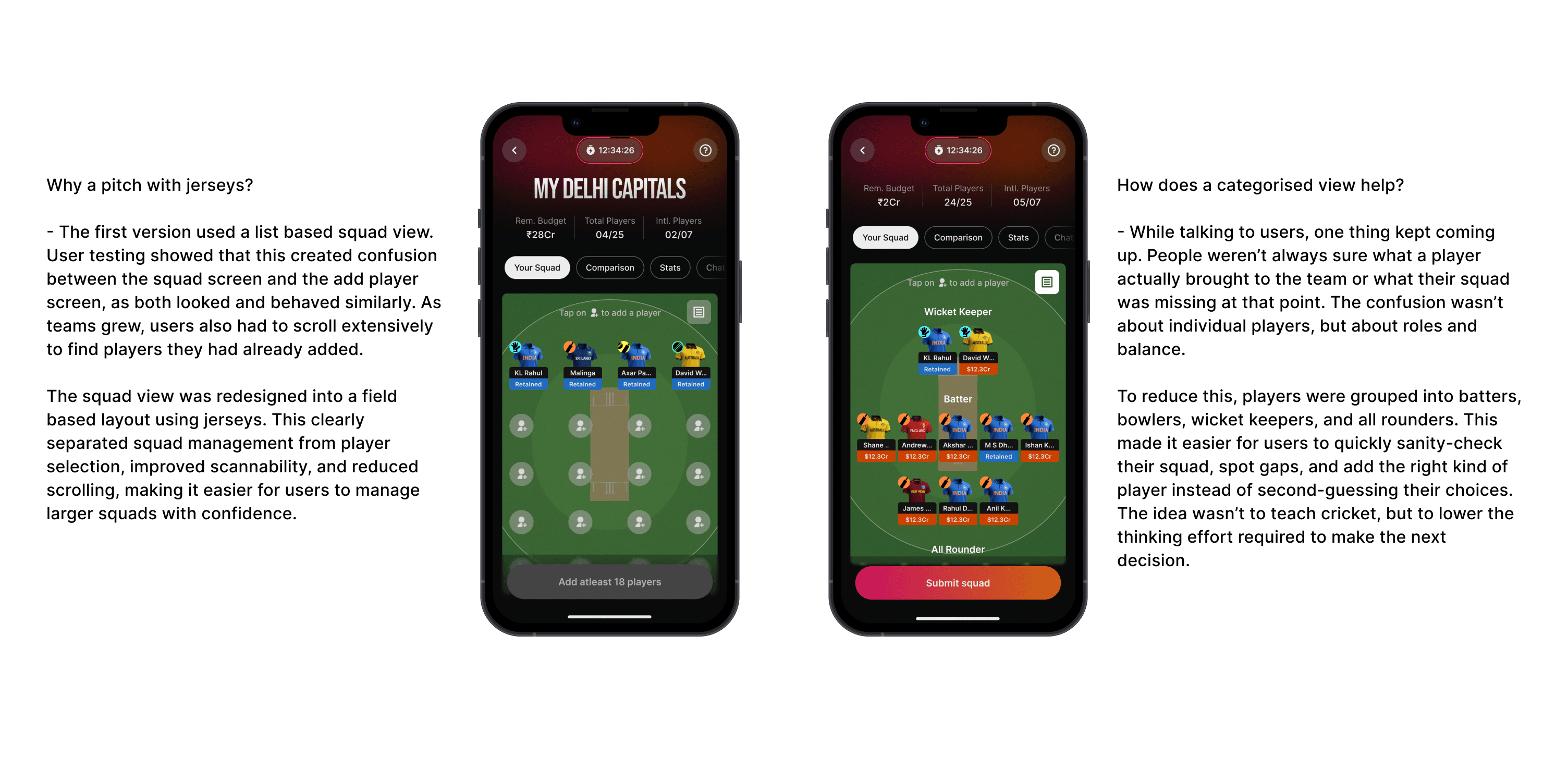
- The original list-based squad view made it hard to distinguish between adding players and managing the final squad, especially as teams grew larger. Switching to a field-based layout created a clearer separation between states, reduced scrolling, and made squad composition easier to scan and reason about.
Onboarding for Squad Auction was critical because the game format was unfamiliar. The first draft relied on a few pointers before sending users straight into the auction, which led to confusion once real decisions had to be made. The goal was to reduce this early uncertainty without slowing users down or turning onboarding into a rulebook.
What changed and why:
- Added a short onboarding flow to establish the right mental model before users entered the auction, prioritising clarity over completeness.
- Introduced contextual tooltips on key screens like Adding a Player and the Bidding screen, broken into small steps and optional to avoid interrupting flow.
- The original list-based squad view made it hard to distinguish between adding players and managing the final squad, especially as teams grew larger. Switching to a field-based layout created a clearer separation between states, reduced scrolling, and made squad composition easier to scan and reason about.
Adding a player & bidding
Adding a player & bidding
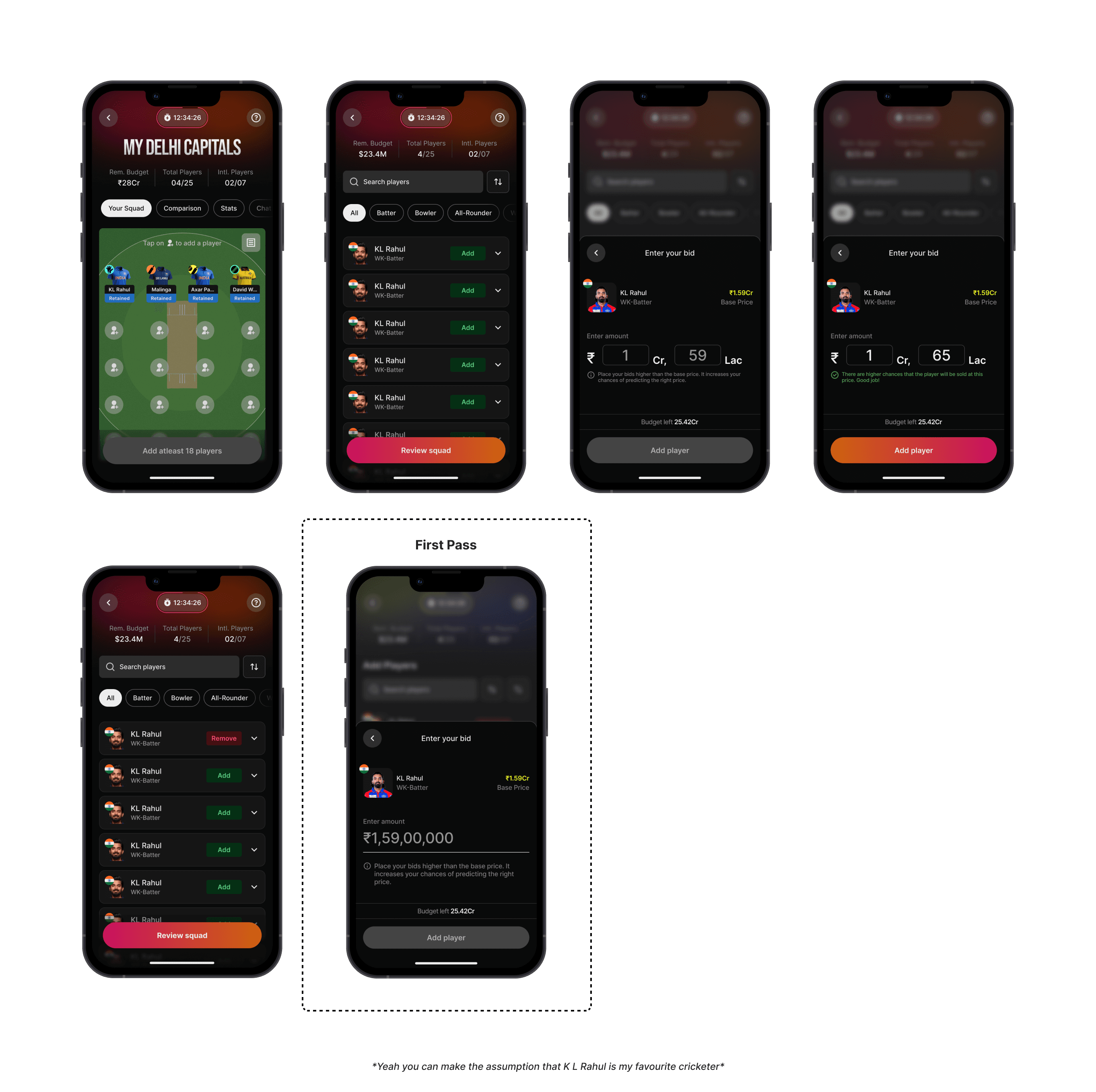
After the first draft, it was clear that users were struggling in two places. While adding players, they often didn’t know what role they were adding or what their team actually needed. During bidding, the friction came from dealing with large numbers, not from the prediction itself. Both issues slowed users down at moments that should have felt decisive.
What changed and why:
- Moved from filters to clear player categories after feedback showed users were getting lost without role context. Categories helped users quickly understand what type of player they were adding and spot gaps in their squad.
- Simplified the bidding input by removing zero-heavy values and focusing only on crores and lakhs. This reduced errors, made edits predictable, and let users focus on the prediction instead of the math
After the first draft, it was clear that users were struggling in two places. While adding players, they often didn’t know what role they were adding or what their team actually needed. During bidding, the friction came from dealing with large numbers, not from the prediction itself. Both issues slowed users down at moments that should have felt decisive.
What changed and why:
- Moved from filters to clear player categories after feedback showed users were getting lost without role context. Categories helped users quickly understand what type of player they were adding and spot gaps in their squad.
- Simplified the bidding input by removing zero-heavy values and focusing only on crores and lakhs. This reduced errors, made edits predictable, and let users focus on the prediction instead of the math
Outcome
Outcome
Squad Auction was shipped as a beta feature with the goal of validating whether fans would engage with a skill-based experience during the IPL auction. While the product is still evolving, early signals helped confirm we were moving in the right direction.
Early outcomes:
🏆 A noticeable increase in the number of squads created compared to earlier internal and limited test releases.
🏆 More users were able to complete full squads without dropping off mid flow.
🏆 Repeat check-ins during the live auction driven by dynamic leaderboard updates.
🏆 Fewer points of confusion reported around squad building and bidding in later testing rounds.
🏆 Positive qualitative feedback around the overall experience, with users specifically calling out the design as intuitive and easy to follow.
Squad Auction was shipped as a beta feature with the goal of validating whether fans would engage with a skill-based experience during the IPL auction. While the product is still evolving, early signals helped confirm we were moving in the right direction.
Early outcomes:
🏆 A noticeable increase in the number of squads created compared to earlier internal and limited test releases.
🏆 More users were able to complete full squads without dropping off mid flow.
🏆 Repeat check-ins during the live auction driven by dynamic leaderboard updates.
🏆 Fewer points of confusion reported around squad building and bidding in later testing rounds.
🏆 Positive qualitative feedback around the overall experience, with users specifically calling out the design as intuitive and easy to follow.
Opportunities going forward
Opportunities going forward
The beta release helped validate the core experience, but it also surfaced a few clear opportunities to extend the game without changing its fundamental nature. These ideas build on behaviours already observed during testing and aim to deepen decision-making and competition in a way that still respects skill over chance.
AI assisted player recommendations:
During testing, it was clear that users relied heavily on instinct and past knowledge when picking players. While stats helped validate decisions, narrowing down choices remained time-consuming, especially in larger player pools.
An AI assisted layer could help users shortlist players based on team needs, past auction behaviour, and player roles. The intent would not be to make decisions for the user, but to reduce search effort and surface relevant options faster, allowing users to stay focused on the prediction itself.
Private competitive groups:
A recurring behaviour we noticed was users discussing their squads with friends outside the platform. This suggests an opportunity to bring that competition back into the experience.
Allowing users to create private groups with friends or family would enable smaller, more personal competitions alongside the global leaderboard. This keeps the experience competitive while making outcomes feel more personal and repeatable across seasons.
~And, that's all folks. Fin~
I am currently on the lookout for Product Design opportunities if you think i would be a good fit then send a mail at anshul672@gmail.com or just call/whatsapp at +91-7004366686.
The beta release helped validate the core experience, but it also surfaced a few clear opportunities to extend the game without changing its fundamental nature. These ideas build on behaviours already observed during testing and aim to deepen decision-making and competition in a way that still respects skill over chance.
AI assisted player recommendations:
During testing, it was clear that users relied heavily on instinct and past knowledge when picking players. While stats helped validate decisions, narrowing down choices remained time-consuming, especially in larger player pools.
An AI assisted layer could help users shortlist players based on team needs, past auction behaviour, and player roles. The intent would not be to make decisions for the user, but to reduce search effort and surface relevant options faster, allowing users to stay focused on the prediction itself.
Private competitive groups:
A recurring behaviour we noticed was users discussing their squads with friends outside the platform. This suggests an opportunity to bring that competition back into the experience.
Allowing users to create private groups with friends or family would enable smaller, more personal competitions alongside the global leaderboard. This keeps the experience competitive while making outcomes feel more personal and repeatable across seasons.
~And, that's all folks. Fin~
I am currently on the lookout for Product Design opportunities if you think i would be a good fit then send a mail at anshul672@gmail.com or just call/whatsapp at +91-7004366686.